Short answer: Size a pool pump so the full pool volume passes through the filter in 6–8 hours (4–6 hours for commercial pools), match the flow to the filter rating, and prefer variable-speed or solar DC pumps to cut energy use by up to 70%. Clean the strainer basket weekly and never run the pump dry.
Calculate pool volume
For rectangular pools: length × width × average depth = volume in m³. For round pools: 3.14 × radius² × average depth. A 10 × 5 m pool with 1.5 m average depth holds 75 m³.
Choose a turnover time
Turnover is the time it takes to pass the entire pool volume through the filter once. Residential pools typically target 6–8 hours; busy hotel and public pools 4–6 hours or less. Our 75 m³ pool with an 8-hour turnover needs about 9.4 m³/h.
Account for system head
Pool systems usually operate against 8–15 m of head from the filter, heater, pipes and fittings. Read the pump curve at your expected head, not at zero head, which is the figure many catalogues headline.
| Pool volume | 8 h turnover flow | Typical pump |
|---|---|---|
| 30 m³ | 3.8 m³/h | 0.75 HP |
| 50 m³ | 6.3 m³/h | 1 HP |
| 75 m³ | 9.4 m³/h | 1.5 HP |
| 120 m³ | 15 m³/h | 2–3 HP |
| 250 m³ | 31 m³/h | 4–5.5 HP or two pumps |
Fixed speed, variable speed or solar
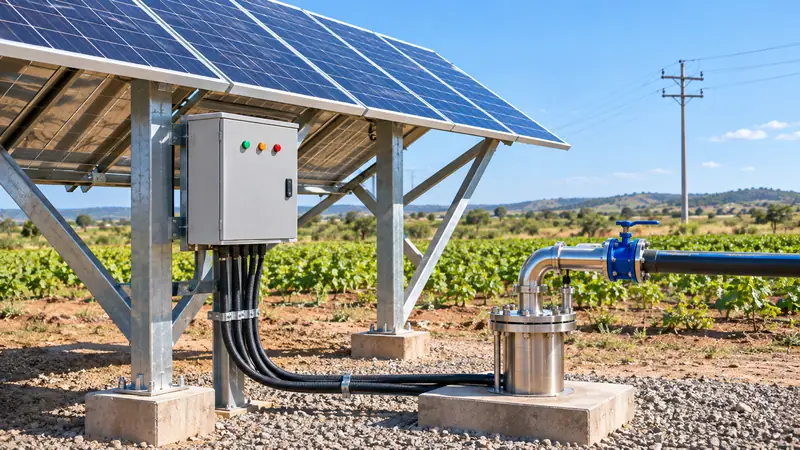
Pump power rises with the cube of speed. Halving speed cuts energy use by around 85% while still moving half the flow, so a variable-speed pump running longer at low speed can save 50–70% of electricity. Solar DC pool pumps remove the energy bill entirely where daytime filtration is sufficient.
Maintenance routine
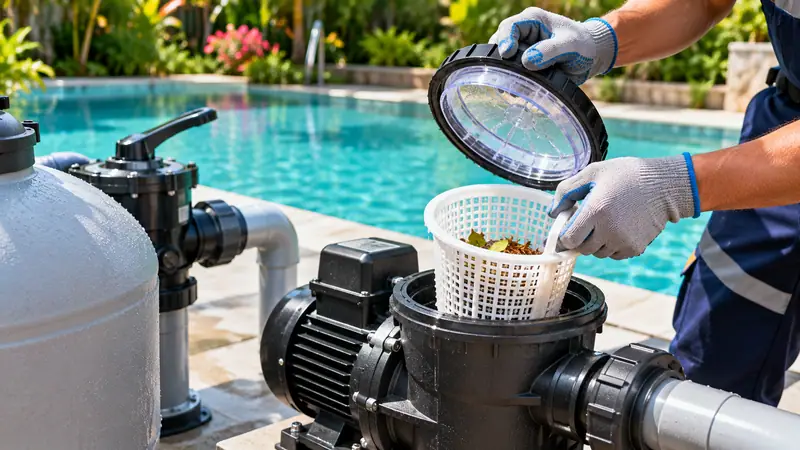
- Weekly: empty the strainer basket; check the lid O-ring for cracks and lubricate it with silicone grease.
- Monthly: check the pressure gauge; backwash or clean the filter when pressure rises 0.5 bar above clean.
- Seasonally: inspect the mechanical seal for drips; keep the motor ventilation clear of leaves and dust.
- Winter: drain the pump body in freezing climates to prevent cracking.
Common problems
Air in the strainer usually means a loose lid, a low water level at the skimmer or a leaking suction fitting. A humming motor that will not start points to a failed capacitor. Water under the pump suggests a worn shaft seal — an inexpensive part to replace early.
Frequently asked questions
How long should I run my pool pump each day?
Long enough for at least one full turnover, typically 6–8 hours for residential pools. Variable-speed pumps run longer at low speed and use far less energy for the same turnover.
Is a bigger pool pump better?
No. An oversized pump can exceed the filter flow rating, reduce filtration quality and waste energy. Match the pump to the filter and pipe size.
Can I run a pool pump on solar power?
Yes. DC permanent-magnet pool pumps such as our 48 V and 72 V DCSPP models run directly from solar panels and are popular in resorts with high daytime filtration demand.